











































































Your cart
There are no more items in your cart

Frame materials: differences, benefits and how to choose
A professional guide to the most commonly used materials for frames: acetate, metal, titanium and combination frames
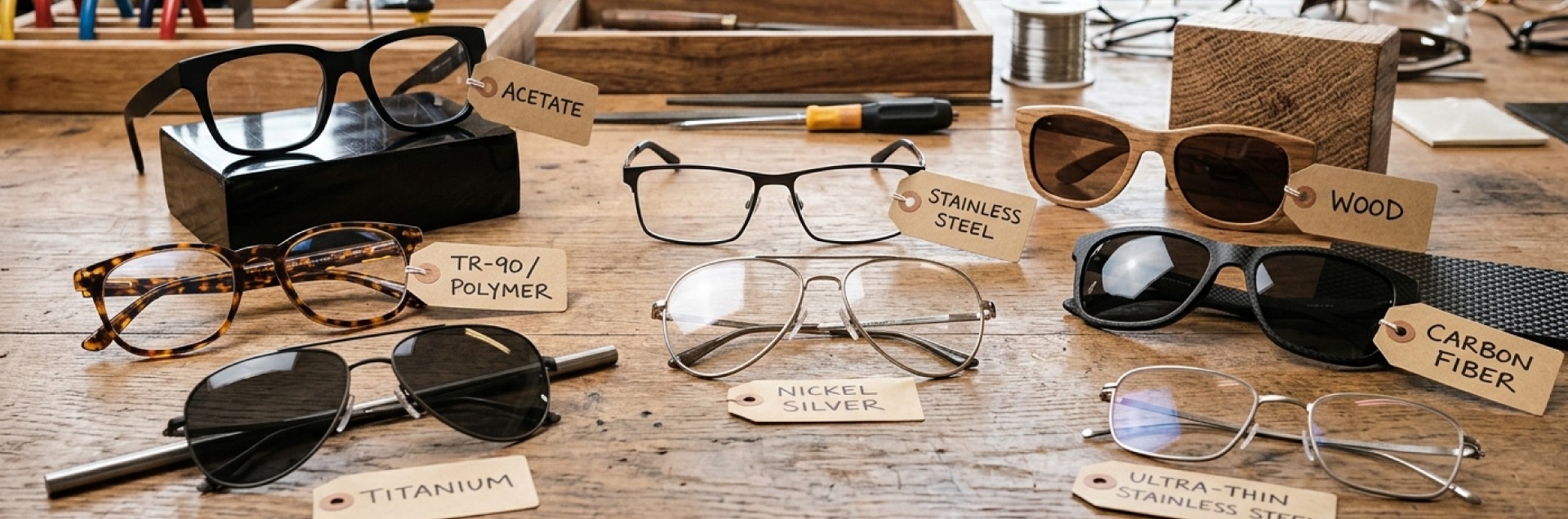
The choice of frame material affects comfort, appearance, durability and how the frames feel on the face. Each material has specific characteristics that make it more suitable for certain styles, needs and personal preferences.
In this guide, we provide a clear and professional analysis of the most commonly used materials for frames: acetate, metal, titanium and combination frames, based on the experience of the Isolani Opticians.
1. Acetate: colour, comfort and personality
Acetate is one of the most commonly used materials for spectacle and sunglasses frames. It is a high-quality plastic material, derived from cellulose, and is known for its aesthetic versatility.
Advantages of acetate:
- a wide variety of colours and shades of transparency
- high level of comfort
- good resistance
- opportunities for handcrafted work
Ideal for: those looking for expressive, colourful frames or frames with a bolder design.
2. Metal: lightness and sleek lines
Metal frames are popular for their lightness and minimalist design. They can be made from stainless steel, aluminium or light alloys.
Advantages of metal:
- subtle, understated lines
- lightness
- good resistance
- suitable for elegant and professional looks
Ideal for: those who prefer thin, lightweight and discreet frames.
3. Titanium: premium strength and lightness
Titanium is a high-end material, highly prized for its combination of lightness and strength. It is hypoallergenic and retains its shape over time.
Advantages of titanium:
- extreme lightness
- high strength
- long-term
- hypoallergenic material
Ideal for: Anyone looking for a premium, lightweight and highly durable frame.
4. Combination frames: style and versatility
Combined frames combine two materials – often acetate and metal – to strike a balance between style and comfort.
Advantages of combination frames:
- sophisticated design
- a balance between lightness and character
- a wide variety of styles
Ideal for: for anyone looking for a modern and versatile frame.
5. How to choose the right material
The choice of material depends on several factors:
- Personal style: colours, shapes, thicknesses.
- Comfort: weight, pressure on the nose, sensation on the face.
- Duration: durability and dimensional stability.
- Everyday use: work, outdoor activities, specific needs.
At Isolani Optical Centres, we always assess proportions, fit and visual performance in order to recommend the most suitable lens material.
If you’d like professional advice on choosing the most suitable frames based on materials, fit and personal style, you can find out more about our service Bespoke glasses, which combines the selection of frames and the design of lenses with the help of a dedicated professional.
6. Materials and selection at the Isolani Boutique
At the Isolani Boutique, you can filter frames by material, compare similar models and see how their weight, thickness and style differ.
7. Conclusion
Every material has specific characteristics that affect comfort, appearance and durability. Understanding the differences helps you choose a frame that reflects your personal style and ensures a comfortable fit over time.
The information contained in this article is for informational purposes only and relates to the fields of optics and optometry. It is in no way a substitute for the advice, diagnosis or recommendations of an ophthalmologist.