










































































Your cart
There are no more items in your cart

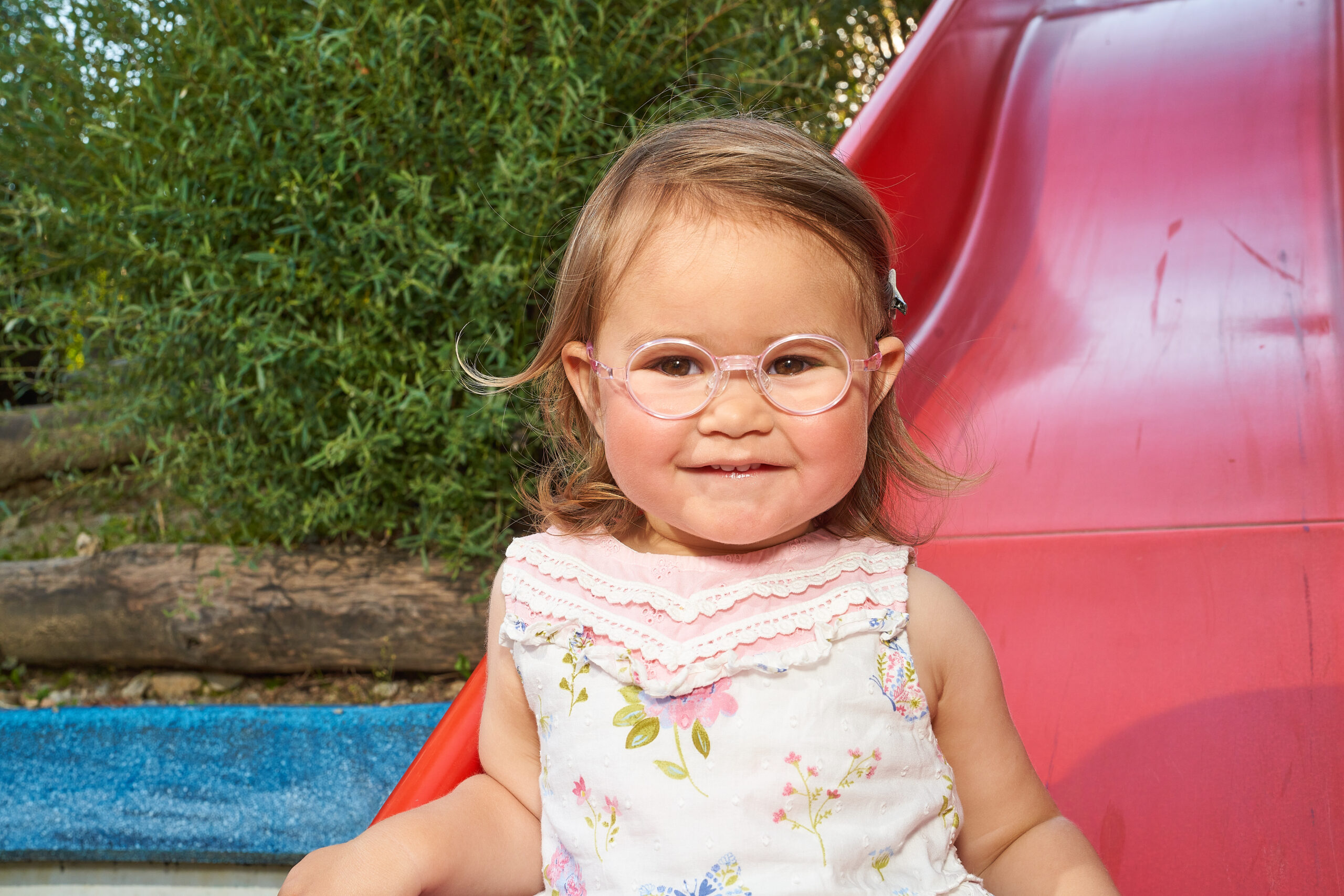
Between the ages of one and three, a child changes rapidly: their face develops, their curiosity grows, and every day is filled with activity. When the optician prescribes their first pair of glasses, Isolani’s task is to turn that prescription into a lightweight, stable and easy-to-wear design.
When should you have your first eye test?
This is one of the questions parents ask most frequently, often accompanied by a concern: ‘But how can they have their eyes tested if they can’t read yet?’. In fact, it isn’t necessary to recognise letters and numbers: eye tests can be tailored by the optometrist to suit different age groups, even when the child is very young.
As a general guideline, in its guidance on early childhood, IAPB Italia recommends an initial check-up within the first year and a full eye examination by the age of three. This schedule is not the same for everyone: paediatricians and ophthalmologists may recommend different timings depending on the individual child.
If the paediatrician advises bringing the check-up forward, it is best to follow their advice without waiting until the child starts nursery school.
The timing of check-ups and the time limits for treatment are always determined by the paediatrician and the ophthalmologist. At Isolani, our work begins after that: we follow the prescription and create a pair of glasses tailored to the child’s face, habits and age.
As they grow, the situation may change, and it is normal to keep an eye on it
In the early years, it is not just the size of the face that changes. The way a child looks at the world and the distances they encounter in everyday life evolve, and, where applicable, their prescription may also change over time. This is no reason to approach every eye test with concern: it simply means keeping a close eye on their development.
For parents, the most useful advice is simple: there’s no need to worry about every change, but neither should you stick with the first solution for years on end. The check-ups recommended by the optometrist and regular checks to ensure a proper fit allow you to support your child’s development with care and peace of mind.
A child’s first pair of glasses must be suitable for use whilst they are playing
At this age, no child stays still to protect their glasses. They run about, lie down, hug, fall over, fall asleep in the car and often touch their glasses with both hands. That’s why trying them on in front of the mirror is just the start: you need to see what happens when they start moving again.
The bridge should rest comfortably without the front of the frames slipping down; the temples should stabilise the glasses without being too tight; and the frames should not rub against the cheeks. Choosing a size that is ‘a bit too big so they’ll last longer’ can be counterproductive: if the glasses slip, the lenses will also shift position in front of your eyes.
- Lightness: The weight should be measured for the complete pair of glasses, including the lenses.
- Stability: The glasses must follow your movements without having to be constantly adjusted.
- Flexibility: A frame that can withstand minor everyday knocks may be more suitable than a rigid frame.
- Correct supports: The bridge, abutments and any sealing system must be selected on the actual tooth surface.
- Ease of servicing: In the early years, adjustments and checks are not the exception, but part of the process.
There isn’t just one type of frame that suits all young children
Swissflex Kids is one of the solutions we know very well: it is lightweight, flexible and modular, and allows you to combine the front section, the bridge and the tips to suit the child. But it is not the only possible option, and we do not want to turn a guide for parents into a presentation of just one brand.
Children’s frames come in a variety of shapes, materials and fitting systems. The choice depends on the proportions of the face, the optician’s prescription, the lenses to be fitted and how the child finds the glasses. In some cases, greater flexibility is required; in others, a specific nose pad or a different temple design. This is precisely why, for children aged between one and three, a fitting in person is more important than a photograph or measurements taken from the internet.
Every Isolani Opticians branch has a space designed for young children: in some branches it’s a room, in others a dedicated corner, but the aim is the same. We want to let them try on frames at a pace, with the right proportions and attention suited to their age, whilst also guiding parents through a technical choice that must then work in everyday life.
To see how we fit these elements into a broader context, you can start with our A HUB dedicated to children’s glasses.
The lenses are based on the prescription and are designed to fit the wearer’s eyes
Once we have received the prescription from the optician, we work with the family to assess the lens material, thickness, coatings and geometry. The frame and the lenses are not two separate choices: the shape and size of the front section affect the weight, balance and final result.
A child does not look at the world whilst standing still and staring straight ahead. That is why we do not settle for a standard size: we check how the frames fit on their face and pay particular attention to the natural way in which they look and move.
Our centring method It starts with the frame, which has already been adjusted, and is tailored to the child’s age and willingness to cooperate. It does not replace the optometrist’s prescription: it enables the prescription to be carried out technically using parameters that are consistent with that particular face and pair of spectacles.
How to help a child get used to wearing their first pair of glasses
Familiarity is built up without making the glasses a constant topic of conversation. Letting the child have a say in choosing the colour, introducing them to the glasses in a natural way and making them part of their routine helps more than giving lots of explanations. If they often try to take them off, before concluding that ‘they don’t want them’, it’s worth checking whether they slip, are too tight or sit uncomfortably.
A well-fitted pair of glasses tends to become part of your daily routine. If, however, anything changes, we’re here to check it out: at our Isolani Opticians The standard adjustment is free of charge and can be carried out as often as necessary.
Growth, minor incidents and long-term support
In the early years, a pair of glasses can lose their shape quite quickly: the child’s face is still growing, the arms are put under strain, and the glasses go through a much more active daily routine than those of an adult. That’s why we don’t just hand over a product; we continue to support the family afterwards.
Where possible, our in-house laboratory provides a free service for minor incidents and adjustments. For major events, the following is available: Isolani Service Charter with Mini-Kasko. The aim is simple: to give parents peace of mind and allow the child to wear their glasses freely.
Frequently asked questions about glasses for children aged 1 to 3
Does a child need to be able to read to have an eye test?
No. The eye specialist arranges the check-up in a way that is appropriate for the child’s age, even when the child is very young. There is no need to wait until they can recognise letters or numbers.
When is the first eye test recommended?
As a general guideline, IAPB Italia recommends an initial check-up within the first year and a full examination within three years. The actual timing should always be agreed with the paediatrician and ophthalmologist.
Can the prescription change as the child grows?
Yes, that can happen. As the child grows and their face develops, their visual needs may also change. The check-ups recommended by the optometrist allow you to monitor these changes with peace of mind.
Which frame is best for children aged between 1 and 3?
There is no one-size-fits-all model. They must be lightweight, stable and well-proportioned, with temples that fit the face comfortably and are compatible with prescription lenses. Trying them on and having them fitted in person are crucial.
Can you buy glasses for young children online?
A photograph or measurements alone are not sufficient to assess the bridge, temples, stability and position of the lenses. For this age group, we always recommend a fitting and direct adjustment on the face.
How often should the frame be adjusted?
Whenever it slips, feels tight, looks crooked or leaves unusual marks, and in any case periodically as the child grows. At the Centri Isolani, routine adjustments are free of charge.
Sources of information used to determine the recommended ages for the first check-ups: IAPB Italy, visual development in children e eye examinations for children aged 0 to 3 years.
Cover image: a child wearing Swissflex glasses, an official image provided by the manufacturer. The photograph shows one possible option and does not imply that the entire content is associated with a single brand.
The information on this page is provided for information purposes only and relates to the optical and commercial sectors. It does not contain any medical, clinical or diagnostic content.