











































































Your cart
There are no more items in your cart

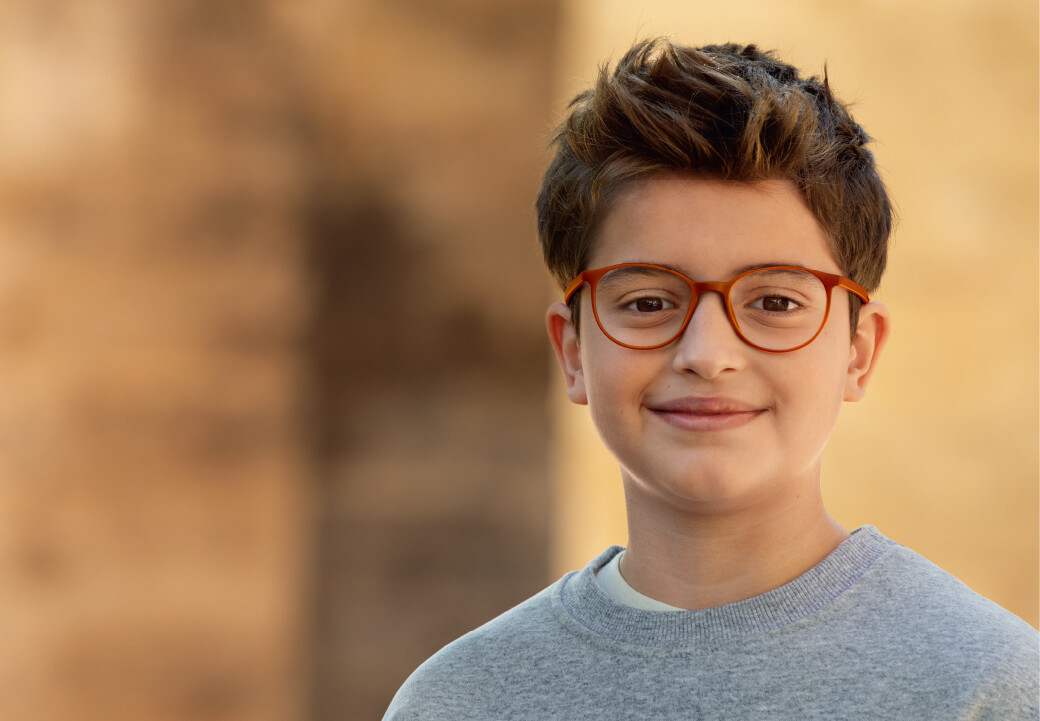
D.I.M.S. technology, a prescription from an optometrist and the design of glasses tailored to children’s everyday lives
When it comes to short-sightedness in children, the name of a lens alone is not enough to tell the whole story. A technology may be advanced and backed by years of research, but it must ultimately become a pair of glasses capable of supporting the child as they study, play, run and grow.
The lensesMiYOSMART by HoyaThey utilise D.I.M.S. technology and serve two purposes: they correct existing short-sightedness and are designed to slow its progression during growth. D.I.M.S. is one of the optical designs specifically developed to address myopic progression, backed by the most extensive research programme and particularly long-term follow-up studies. However, the starting point always remains the same: the prescription and the recommendations of theophthalmologist.
That is when Isolani’s work begins: choosing a truly stable frame, observing how the child wears the glasses, taking measurements whilst the child is in their natural posture, and ensuring the lenses remain correctly positioned over time. This is where technology meets real life.
Inside MiYOSMART: the D.I.M.S. design
MiYOSMART is an ophthalmic lens developed by Hoya to correct myopia and slow its progression over time. It corrects the prescribed dioptres and utilises D.I.M.S. technology — Defocus Incorporated Multiple Segments — developed in collaboration with the Hong Kong Polytechnic University, to slow down the increase in myopia that can occur during development. Individual refractive progression is assessed by the optometrist over time and cannot be predicted by this product.
The lens combines an area that provides the prescribed correction with a structure of dedicated optical segments. In this way, sharp vision coexists with the specific defocus effect intended by its design. It is a complex technology, but for the wearer it should translate into something very simple: looking, moving and going about their day naturally.
The starting point is always the optometrist’s prescription
The assessment of short-sightedness, diagnosis, prescription and guidance on the treatment pathway are the responsibility of the ophthalmologist. It is therefore not the brand that determines the treatment pathway, nor is it the product that determines the choice of lens: it is the prescription that establishes the starting point.
At Optical Centres Isolani, we turn that prescription into a comprehensive service: choosing the frames, taking measurements, centring the lenses, making the glasses, carrying out adjustments and providing ongoing support. We work with the leading manufacturers and can provide the various solutions recommended, without turning technology into a one-size-fits-all commercial option.
A technology developed over time
One of the most interesting aspects of D.I.M.S. technology is the depth of its research. In the two-year randomised trial conducted on children aged between 8 and 13, the group wearing D.I.M.S. lenses showed, on average, slower myopic progression and less axial elongation compared with the group wearing monofocal lenses.
The key phrase is ‘on average’. A study describes what happened within a specific group; it cannot predict the response of every single child. This is why scientific data is a valuable resource, but it must always be used within the framework set out and monitored by the ophthalmologist.
The D.I.M.S. research programme also includes a published six-year follow-up, which found that the control effect was maintained over time and observed no evidence of a rebound effect following discontinuation. In 2025, eight-year results were also presented; however, these are preliminary conference data, based on a limited group of patients on continuous treatment, and should be interpreted differently from a peer-reviewed publication.
The length of the research programme means that D.I.M.S. is a particularly well-documented technology. This does not automatically make it superior to others, nor does it mean it is suitable for every child. There are also other optical designs backed by research, such as H.A.L.T., which is used inEssilor Stellest lenses: our task is not to rank brands, but to apply, with precision, the solution that is consistent with the instructions we have received.
Scientific insights:two-year D.I.M.S. randomised trial, six-year peer-reviewed follow-up e conference abstract after eight years. Product information:HOYA MiYOSMART official page.
Technology alone is not enough
A specialised lens can only fulfil its optical design if it remains in the correct position in front of the eyes. That is why we choose frames that are lightweight and durable, but above all stable when the child bends their head down, runs, studies or plays.
The bridge, arms, tilt and fit are not merely aesthetic details. In theIsolani ExperienceThey form part of the same process, which combines the prescription, the lenses, the frames and the final check of the finished pair of spectacles.
Behavioural Alignment: the true value of Isolani
Lens technologies are available at many opticians. What really sets our approach to using them apart is theBehavioural Alignment. We do not merely take static measurements: we observe posture, head tilt, the natural position of the frames and the way in which the child uses their eyes.
These real-world parameters enable us to position the lens design exactly where the glasses will be worn in everyday life. This is our secret weapon: not a clinical promise, but practical precision built on experience.
Where relevant, in theSimulation RoomWe can also explain and compare the optical solutions before the final design is finalised, making the process clearer for the family as well.
Adjustments and ongoing support
Children’s glasses do not remain the same over time: the face grows, the temples become loose, and the frame may slip or become misshapen. For this reason, after delivery, we continue to monitor their fit, adjustment and stability. This technical support is distinct from the eye tests carried out by an optometrist, but is essential for maintaining the intended fit.
You can find out more about the programme dedicated tochildren's glassesand the guide onProgressive short-sightedness in children.
As we prepare to return, ourBack to School 2026: Eyewear, School and Children’s EyesightIt provides practical guidance on fit, digital features, and checks and adjustments for glasses.
Training and collaboration with the medical profession
Our clinical experience grows as we engage with the medical community. Between 2023 and 2025, we organised three events focusing on myopia progression and vision at different stages of life, attracting a total of over 300 participants, including ophthalmologists, orthoptists and eye care professionals.
This is how we have always approached our work at Isolani: studying technologies, respecting the doctor’s expertise and bringing every prescription to life through a pair of carefully designed glasses.
Read the reports onFocus on Short-Sightedness 2023, Focus on Myopia and Presbyopia 2024 e Evolving Vision 2025.
Frequently Asked Questions about MiYOSMART lenses
Do MiYOSMART lenses cure short-sightedness?
No. They correct existing short-sightedness and are designed to slow its progression during growth. The course of the condition may vary from child to child and must be assessed over time; diagnosis, prescription and monitoring are the responsibility of the ophthalmologist.
Is MiYOSMART suitable for all children?
Not automatically. The solution must be consistent with the prescription and the optometrist’s advice, as well as with the child’s actual characteristics and needs.
Where does the myopia management programme begin?
The process always begins with an assessment, a prescription and the ophthalmologist’s instructions. Isolani issues the prescription and oversees the technical aspects of lens fitting, frame selection, the manufacture of the spectacles and after-sales support.
What does D.I.M.S. technology mean?
It is an optical design that combines the zone with the prescribed correction and numerous segments dedicated to myopic defocus, whilst maintaining clear vision through the lens.
Do the percentages from the studies apply equally to every child?
No. The results of the studies describe the averages observed in the groups examined. Individual responses may vary and must be assessed as directed by the ophthalmologist.
Why are frame fit and lens centring important?
This is because the lens must remain in a stable position in front of the eyes whilst studying, playing and moving. Isolani’s Behavioural Centring takes into account measurements, posture, fit and the actual use of the spectacles to ensure they are made correctly.
The information on this page is provided for information purposes only and relates to the optical and commercial sectors. It does not contain any medical, clinical or diagnostic content.