









































































Your cart
There are no more items in your cart

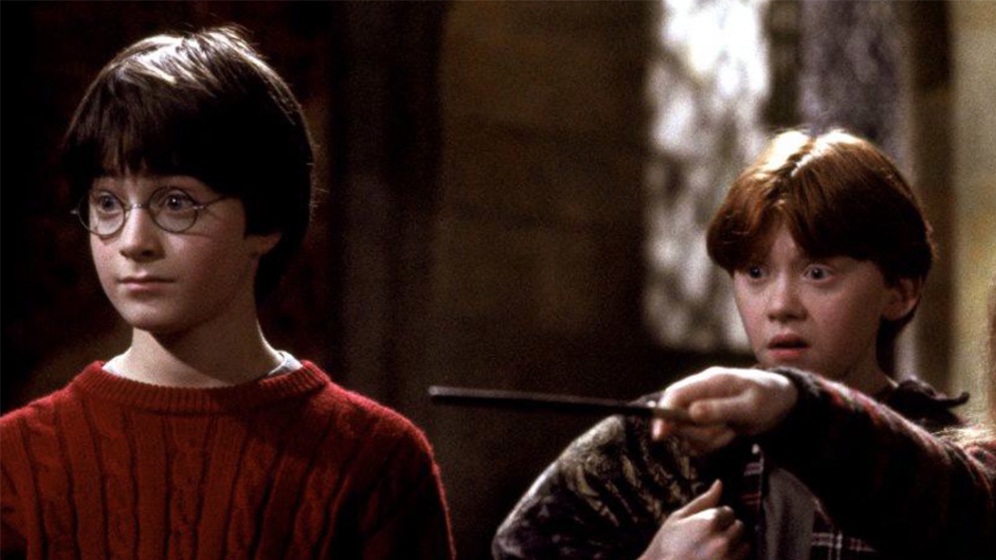
Two thin circles, a scar and a face that has become instantly recognisable: Harry’s spectacles have made their mark on cinema, music and the history of fashion, but they also hold a very practical lesson in lens design.
There are characters we recognise by their voice, others by their clothes or a gesture. For Harry Potter, almost two black circles are enough. On 26 August 2026, The Philosopher’s Stone returns to cinemas for its 25th anniversary, as announced by Warner Bros. Italia. Those glasses will appear again alongside Platform 9¾, the floating candles and the first wonder of Hogwarts.
They aren’t just an accessory thrown in to complete the outfit. On Daniel Radcliffe’s face, the round frames reveal, even before his words do, a curious, vulnerable and stubborn young man. They are simple enough to belong to a student and distinctive enough to become a symbol. Cinema did the rest: today, we can draw two circles, add a small lightning bolt, and already know exactly who we’re talking about.
Two circles, one character
The strength of that frame lies in a contrast. The design is neat, almost perfect; Harry, on the other hand, always turns up with his hair all a mess and the weight of the world on his shoulders. The frames frame his eyes without making them look harsh and give him an intelligent air without turning him into the top of the class. They are delicate yet stubborn, just like him.
It’s a lesson that applies beyond the film set too. A pair of glasses really works when they don’t look as though they’ve been chosen simply to follow a trend, but when they end up becoming part of the person. That’s why ‘I want a pair of glasses like Harry Potter’ is just the start: you still need to find the right lens diameter, bridge width, material and visual weight to make that look believable on your own face.
What were Harry Potter’s stage glasses really like?
Behind those two circles lies more than just an idea from the costume department. The most well-documented reference throughout the saga is the Savile Row, Warwick: a frame round-eye with a slim metal frame, recognisable by its ‘W’-shaped bridge and the absence of the classic adjustable nose pads. The black finish clearly outlines the frame, yet leaves Daniel Radcliffe’s eyes and expressions visible: a balance that is simple only in appearance, yet decisive in front of the camera.
The The official history of Savile Row Eyewear He links the frames worn by Harry, Dumbledore and Moaning Myrtle to Algha Works, the historic London-based manufacturer. He also explains that the size of Daniel Radcliffe’s glasses was adjusted as the actor grew and that, over the years, more than a hundred pairs were made. Thus, rather than a single, unchanging object, it was a family of prop frames capable of maintaining the same visual signature on a face as it transitioned from childhood to adulthood.
The connection with Belluno dates from the next phase of the same story. Following the transition from American Optical to private ownership in 1996, Algha Works continued to manufacture in London until 2020. In that year, the historic machinery was transferred to Italy and entrusted to the artisans of Cadore for a restoration that lasted two years; in 2022, the Savile Row collection was relaunched from Well done to Domegge di Cadore.
What is fascinating is that the Warwick has not remained merely an archive piece. The model still exists and is manufactured today in Italy using the same restored machinery that once belonged to the London factory. The glasses featured at the start of the saga are therefore attributed by the brand to Algha Works; the current Warwick retains that design, but is part of the new artisanal production in Cadore.
From John Lennon to Harry Potter: a form that spans the ages
Long before Hogwarts, John Lennon had transformed the small metal circles into a symbol of creative freedom. On the face of Gandhi that very simplicity conveyed rigour and restraint; Le Corbusier Instead, he chose dark, thick frames, almost like miniature architectural structures. Later Steve Jobs made them minimalist, whilst Ozzy Osbourne, with their coloured, dark lenses, took them into the world of rock.
This is what makes the round shape so versatile: the shape remains recognisable, but takes on a different character depending on who is wearing it. It can be intellectual, rebellious, austere, futuristic or whimsical. And it doesn’t necessarily have to be a perfect circle. The variation pantos, which is slightly more open and slightly flatter at the top, retains its iconic appeal but often complements eyebrows and facial features more easily. In thin metal, it appears light and understated; in acetate, it takes on character and presence.
When an iconic design also becomes a clever technical choice
For those with moderate to severe short-sightedness, the appeal of round frames can offer a very practical advantage. A negative lens is thinner in the centre and gradually becomes thicker towards the edge. If the front of the frame is wide or the pupil is significantly off-centre in relation to the lens, a larger portion of that peripheral area remains within the frame: the rim may be more noticeable, the weight and the ‘shrinking’ effect increase, and the side areas may be less comfortable to wear.
A compact circle — or a well-proportioned pantos — can, on the other hand, ‘cut out’ part of the thicker periphery during shaping. The result can be a thinner, lighter lens that looks neater and has a better-organised useful area. This is not some magic inherent in the round shape, nor does it automatically apply to every prescription: the diameter, index and geometry of the lens, the interpupillary distance, the position of the optical centre and the way the frame sits on the face all play a part.
It is precisely here that style ceases to be a snapshot and becomes a project. With our Behavioural Alignment We measure the parameters whilst the person assumes their natural posture. This allows us to determine whether that circle, as well as being comfortable, is actually the right basis on which to build the lenses.
You don’t just choose ‘any round one’: you choose your own
The old rule that round glasses only suit square faces is too convenient to be true. Just a few millimetres’ difference is enough to transform the look. A small metal circle can brighten up strong features; a slim pantos frame can complement a soft face; a more striking acetate front can become the focal point of the whole look.
The bridge also makes more of a difference than it might seem: it affects the height of the frame, how it sits in relation to the eyebrows, and how securely it sits on the nose. The bridge width and temples only tell part of the story; in our Guide to spectacle sizes You get an initial idea of how they look, but it is on the face – whilst talking and moving – that a pair of glasses truly reveals their balance.
The Isolani Experience It stems from this idea: never to separate aesthetics from fit and visual quality. The aim is not to go out dressed as a character, but to find a design so harmonious that, over time, it becomes part of one’s own identity.
From the perfect circle to the pantos: five contemporary interpretations
In the Isolani catalogue, the round family is not limited to a single brand. The more compact oval shapes are closely related to them, as is the Pantos, which retains the curve but opens out slightly at the top. However, where a truly round model exists, it is right to start with that: we have therefore chosen four round frames and one Pantos – five contemporary ways of transforming the same geometry through material, size and character.
The glasses selected below are not intended to replace the Warwick or to be treated as props: they are original models from their respective brands that reinterpret the same round and pantos family today, each with its own proportions and character.
- Ray-Ban Round Metal RX3447V 2991, 50 mm — the slim, unisex black metal ring set against a gold background retains all the graphic immediacy of the design.
- Ray-Ban Round Metal RX3447V 3173, 50 mm — the same design with a black-on-rose-gold finish, which is warmer and more contemporary.
- Miu Miu MU 02WV 16K1O1, 48 mm — a truly round, compact and decidedly fashionable pair of spectacles, which takes the same shape and translates it into the Boutique style.
- Persol PO3092V 96, size 48 — the Pantos variant in Terra di Siena acetate: it retains the curve and the fitted silhouette, but with a less perfectly circular upper section and a more textured feel.
- Carolina Herrera HER 0235 RHL, size 54 — a larger version in gold and black metal, for those who want the frame to make a bigger statement on their face.
Ray-Ban offers the most faithful interpretation of the minimalist metal round frame; Miu Miu demonstrates just how fashionable this same shape can become, whilst Persol illustrates the natural transition from round to pantos frames. Availability and delivery times are subject to change: for this reason, we always check each individual model before publication. You can start by browsing the full selection of prescription glasses, but if the frames are to accommodate lenses for severe short-sightedness, the fitting and design take precedence over the name written on the temple.
From the cinema to the individual
Harry Potter’s glasses have become iconic precisely because they do not try to steal the limelight: they help the character to come to life. This is perhaps their most successful spell. Their shape has become part of the collective imagination, yet it still leaves room for the face wearing them.
From the Hogwarts set to John Lennon, from Le Corbusier to rock music, two circles have told the stories of very different people without losing their own identity. The secret is not to copy them, but to find your own version. It is the same thread that runs through the stories collected in our A hub dedicated to eyewear in film, music and sport.
Frequently asked questions about round glasses
What shape are Harry Potter’s glasses?
They are round in shape, with thin rims and a simple bridge. Some details change over the course of the films, but the circular shape remains one of the character’s most recognisable features.
Is there actually a model based on the glasses from the films?
The most well-documented reference throughout the series is the Savile Row Warwick, a round metal frame with its distinctive ‘W’-shaped bridge. The brand’s official history states that numerous pairs were made in different sizes to keep pace with Daniel Radcliffe’s growth. The models selected by Isolani are not the on-screen glasses, but contemporary interpretations of the same round and pantos family.
Do round glasses only suit square faces?
No. The diameter, bridge, thickness, colour and position on the face completely change the look. The same shape can flatter very different facial features when the size and construction are right.
Are round frames suitable for severe short-sightedness?
It can be a good choice if it is compact, well-centred and consistent with the prescription. Reducing the peripheral portion of a negative lens can help to minimise thickness and weight, but the result depends on the overall optical design and not just on the shape.
What is the difference between a round frame and a pantos frame?
The round shape tends towards a full circle; the pantos retains the softness of the curve but often features a slightly more open or flattened upper section. It is a subtle variation that can make the frame look more natural on certain faces.
Cover image: a scene from Harry Potter and the Philosopher’s Stone, © Warner Bros. Entertainment. Image taken from the Warner Bros. Italia official page; 16:9 aspect ratio adjustment for editorial use.
The information on this page is provided for information purposes only and relates to the optical and commercial sectors. It does not contain any medical, clinical or diagnostic content.