










































































Your cart
There are no more items in your cart


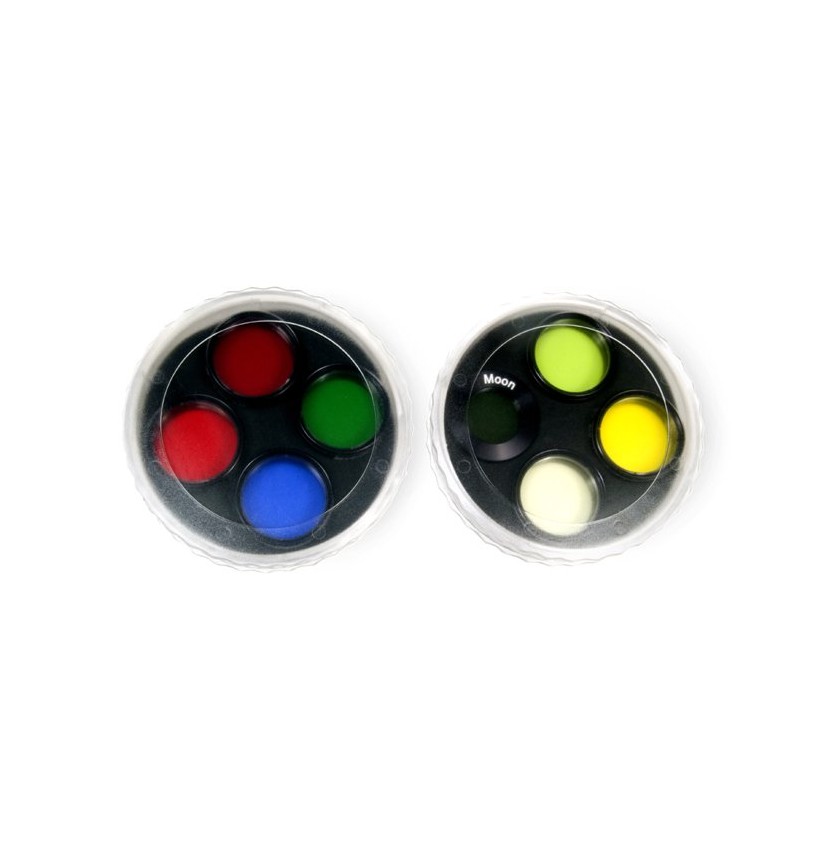
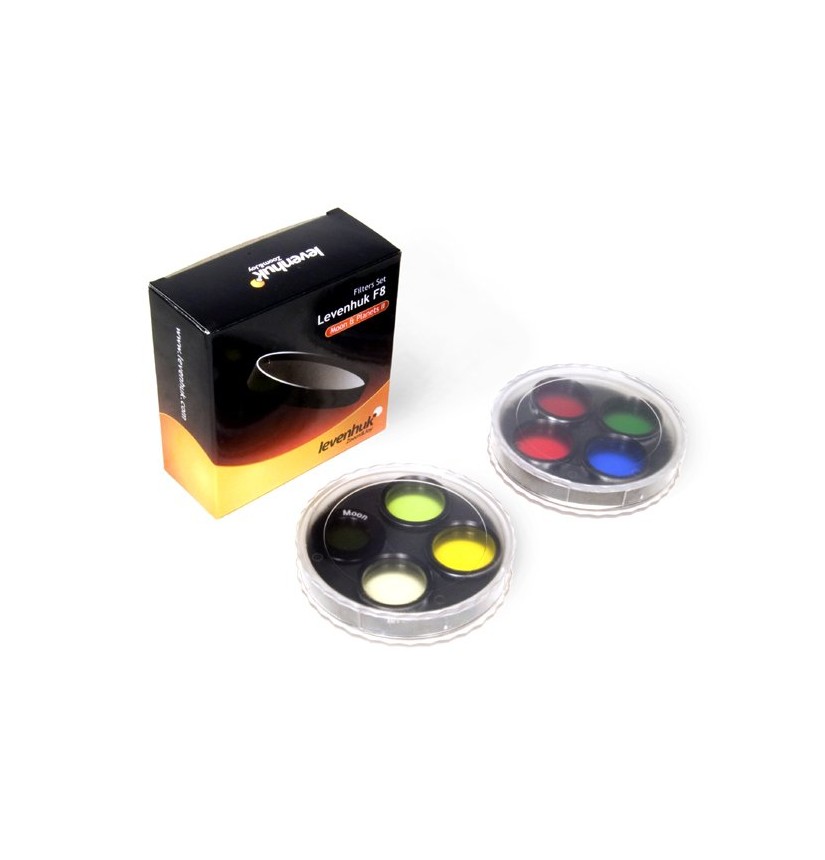
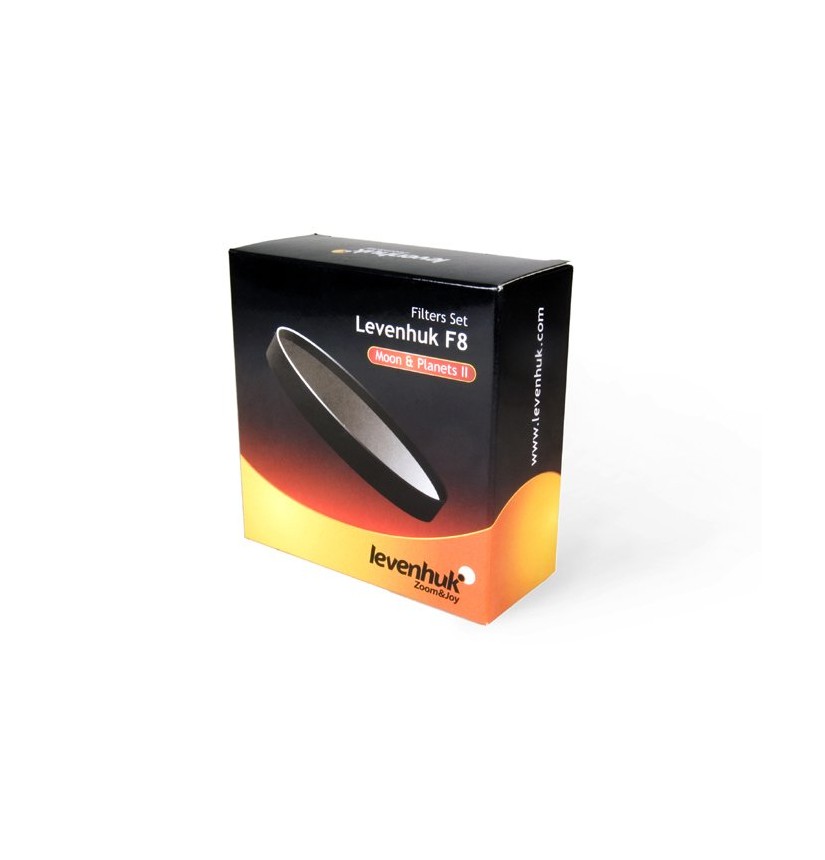
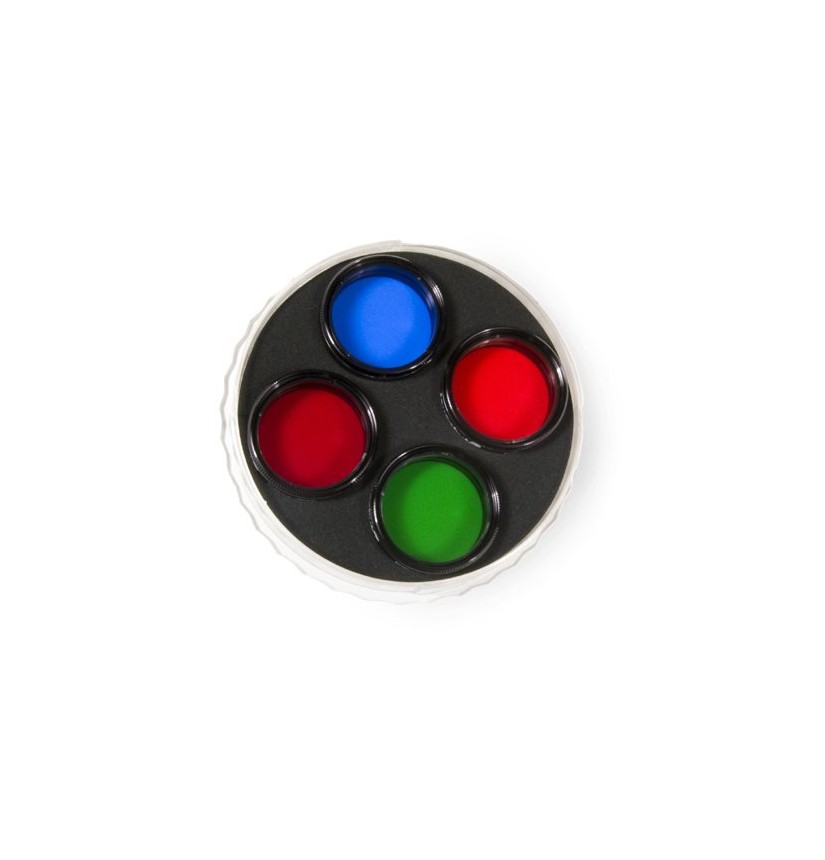
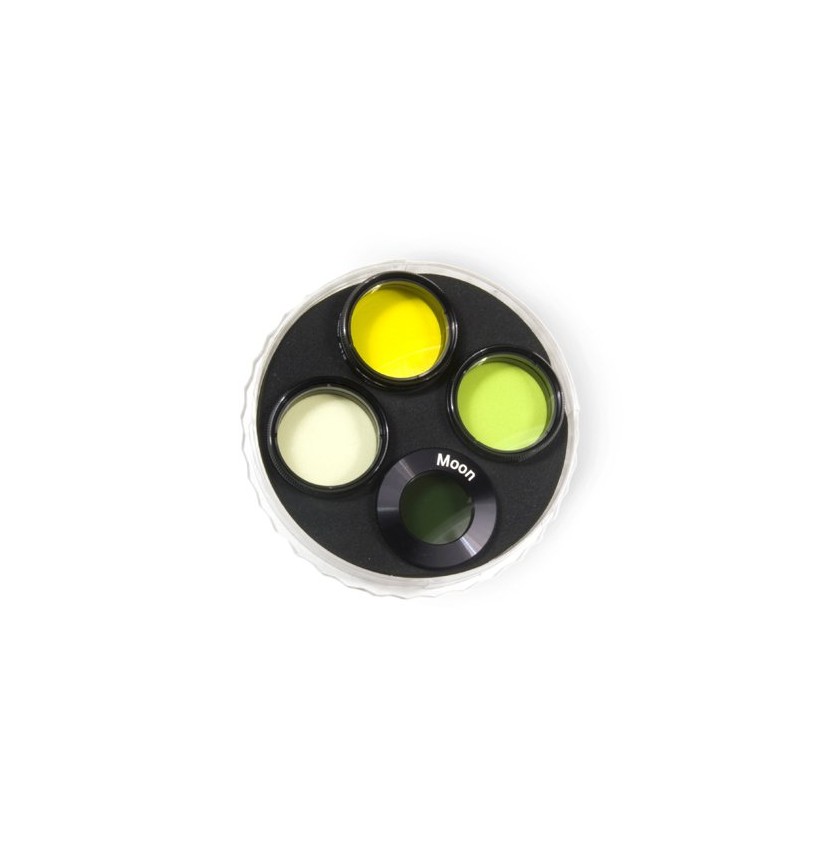
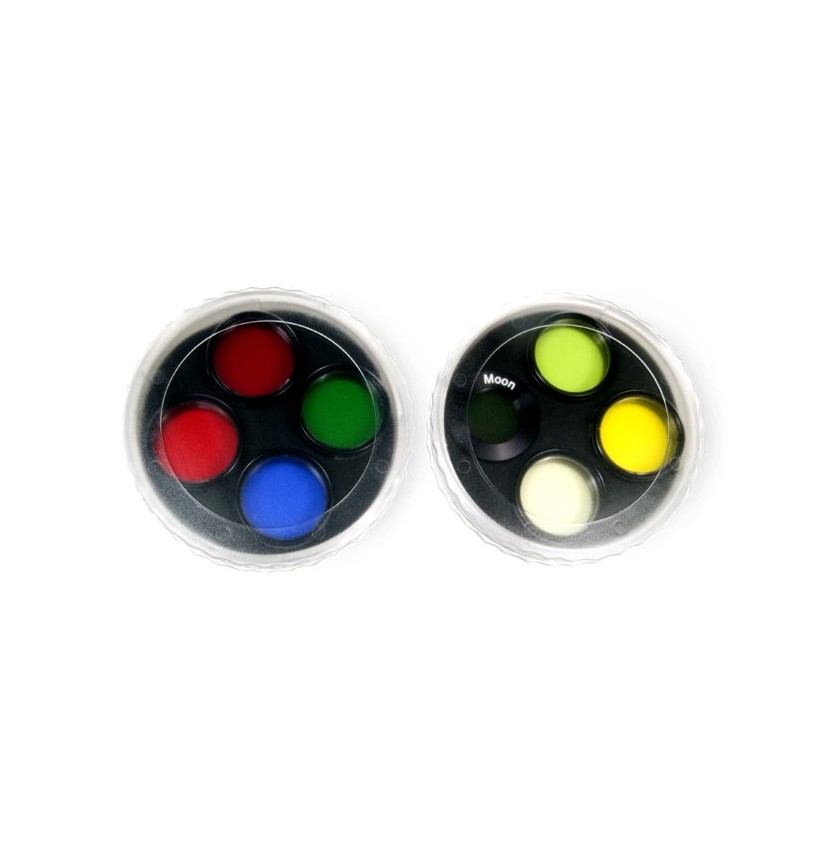
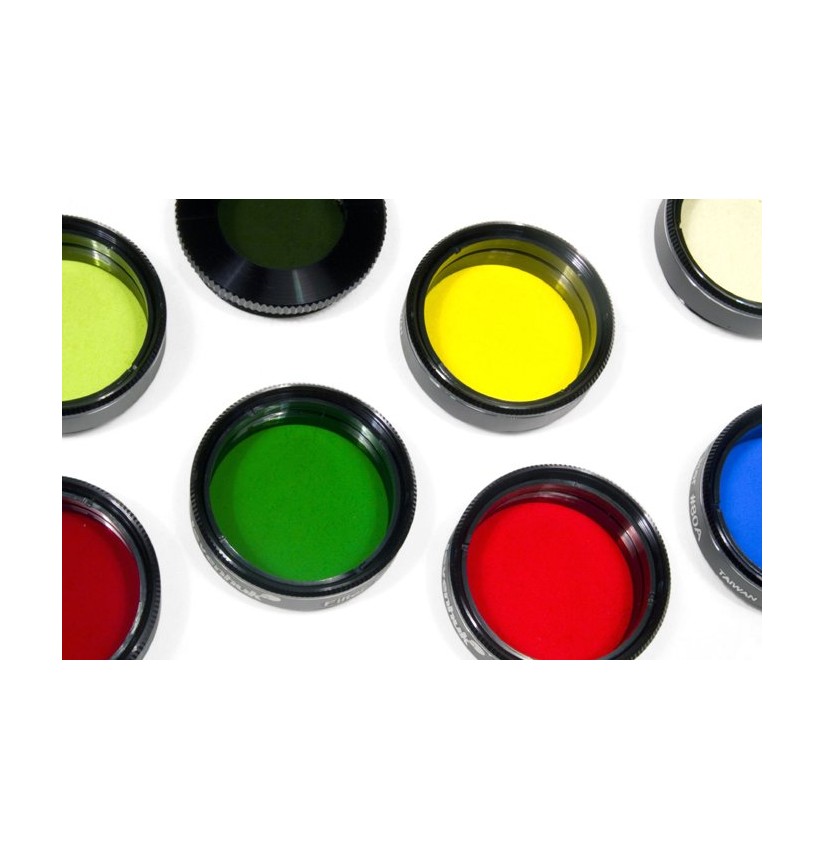
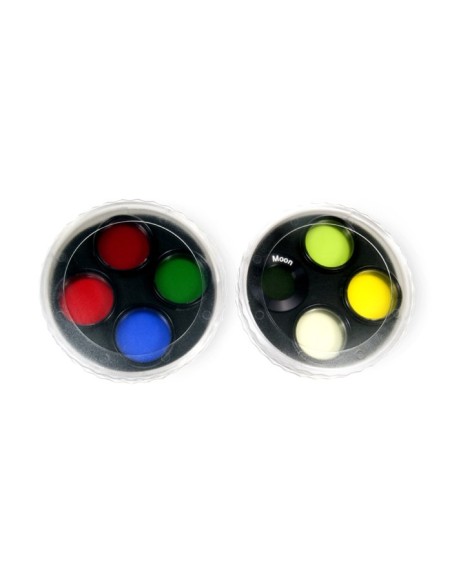
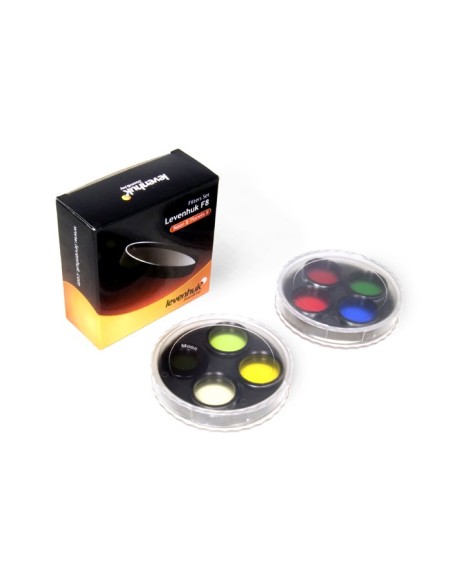
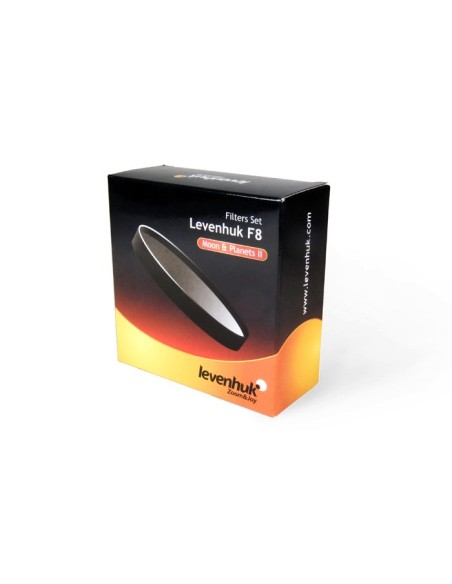
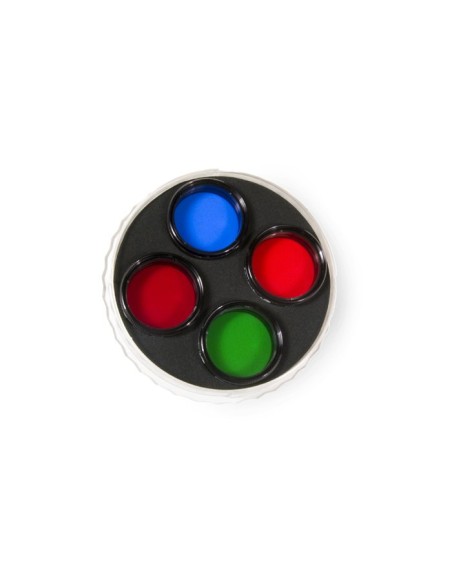
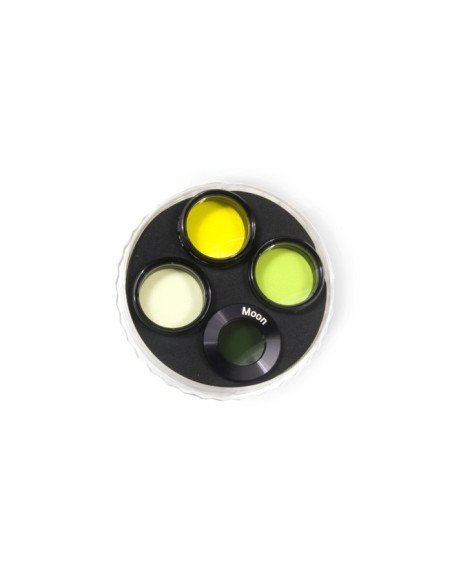
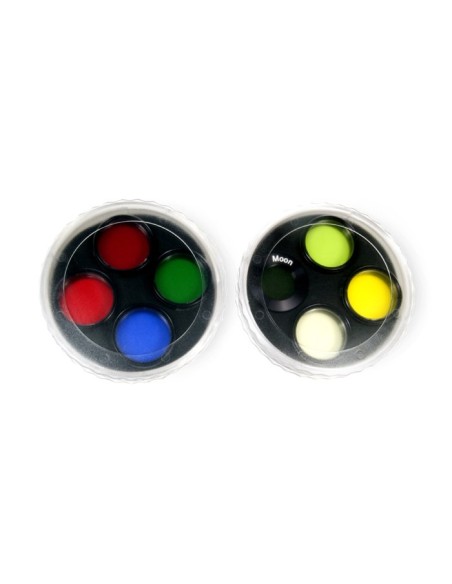
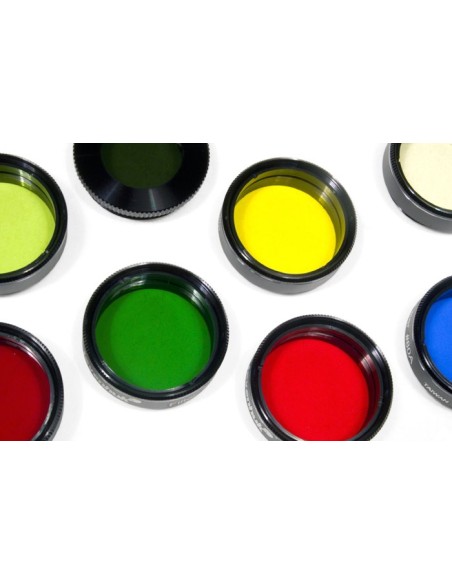


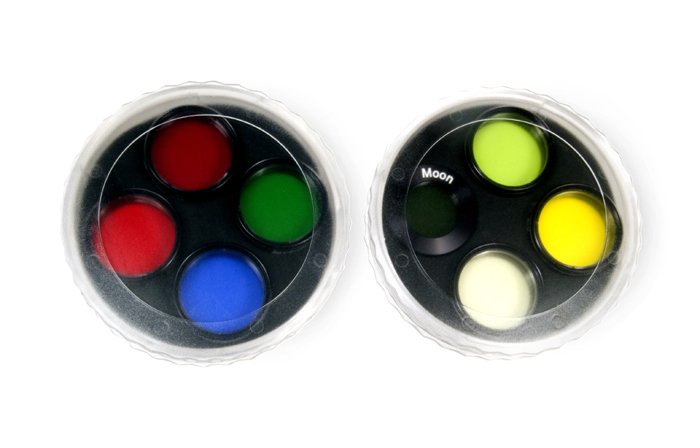
The Levenhuk F8 ‘Solar System’ filter set comprises eight filters designed for the detailed study of our Solar System. All filters have a barrel diameter of 1.25” and are fitted with an internal thread to allow different filters to be combined.
Levenhuk 1.25”
Lunar Filter
This filter is essential for extended observations of the Moon. When more than 80 per cent of the Moon is visible, it becomes very bright, to the point where it can cause eye strain. This is why it is sometimes not possible to study it in detail. This filter reduces its ‘brightness’, even allowing observations of the full Moon.
Levenhuk #8 1.25” Optical Filter (light yellow)
This filter is used to observe the seas and dust clouds of Mars, details of Jupiter’s belt, as well as Uranus, Neptune and the Moon. It can be used for observing comets. It features high transmittance, making it suitable for telescopes with small apertures. It reduces chromatic aberrations in refracting telescopes.
Levenhuk #11 1.25” optical filter (yellow-green)
This high-transmittance filter can be used on telescopes with small apertures. Through this filter, you can observe Saturn clearly – particularly the Cassini Division – as well as Mars and Jupiter. In refracting telescopes, it minimises chromatic aberration.
Levenhuk #12 1.25” Optical Filter (yellow)
Like the previous one, this filter is also recommended for owners of small telescopes. It transmits light well, enhancing the contrast between the details of the Moon, Mars and Jupiter. It can be used to observe Venus and comets.
Levenhuk #23A 1.25” optical filter (light red)
Its use is recommended for apertures of 130 mm and above. This filter is used for detailed study of Mars and the Moon, as well as atmospheric phenomena on Saturn and Jupiter. It can be used for observing Mercury at twilight and for daytime observations of Venus. Comet tails are clearly distinguishable through this filter.
Levenhuk #25 1.25” Optical Filter (red)
This filter is designed for telescopes with apertures of 150 mm or more. It is an excellent choice for observing the polar caps, seas and dust clouds on Mars, as well as the clouds on Jupiter and Saturn. This filter can also be used to observe the Moon.
Levenhuk #56A 1.25” optical filter (light green)
This filter is extremely useful for observing Jupiter. It enhances the details of the Great Red Spot, as well as the myriad of faint, barely visible atmospheric features. It can also be used to observe Saturn and Venus. It is not a suitable filter for studying the Moon. It is compatible with small-aperture telescopes; it partially eliminates chromatic aberrations in refracting telescopes.
Levenhuk #80A 1.25” optical filter (blue)
This is one of the most popular filters for studying the planets of the Solar System. It allows you to observe Jupiter’s Great Red Spot and Saturn’s poles in detail. This filter is also widely used for observing the Moon, Mars, Venus and Mercury.
Features:
- Eight optical filters for observing the Moon, planets and comets
- Optical glass filters that produce a sharp, clear image
- Compatible with telescopes of various apertures
- Internal thread allowing different filters to be combined
- 1.25” filter barrel diameter
The kit includes:
- Lunar filter
- Filter #8 (light yellow)
- Filter #11 (yellow-green)
- Filter #12 (yellow)
- Filter #23A (light red)
- Filter #25 (red)
- Filter #56A (light green)
- Filter #80A (blue)
- Plastic protective case – 2 pcs
| Specifications | |
|---|---|
| Optical material | Optical glass |
| External thread (for fitting into the eyepiece) | yes, 1.25” |
| Internal thread (for combining different filters) | Yes |
| Operating temperature range, °C | −5… 35 |
| Usage | General-purpose product. Recommended for children aged 3 years and over. |
| Brand | Levenhuk Inc., USA |
| Warranty, years | 2 |
| EAN | 0611901510644 |
| Package dimensions (WxDxH), cm | 10x10x4.5 |
| Shipping weight, kg | 0.2 |