








































































Your cart
There are no more items in your cart


From Victoria Beckham’s understated elegance to Carrera navigator frames: why the same detail takes on a different character from one frame to another.
There are details that demand attention. The double bridge is one such detail: a second line above the nose, seemingly small, yet capable of transforming the look of a pair of glasses. It may evoke the Aviator, of course, but to stop there would be to miss the interesting part. Today, it features across both prescription frames and sunglasses, ultra-thin metals and bolder acetates, sports collections and tailored wardrobes. It isn’t a single model that keeps reappearing: it’s a shape that every fashion house interprets in its own way.
The double bridge does not belong to any single style
When it’s light, it almost seems to be drawn in the air. When it becomes thick or geometric, it gives structure to the front and draws attention to the eyes. What surrounds it matters too: a teardrop lens makes it feel familiar; a rectangular shape gives it a more contemporary look; a navigator-style frame emphasises its energy. That’s why asking whether ‘the double bridge is in fashion’ is less useful than asking which double bridge best reflects your own style.
Eyewear: a balance of proportion and character
In prescription frames, which accompany the face for many hours, this detail becomes a statement of personality. Victoria Beckham’s Fine Double Bridge Optical opts for a slim metal frame: it doesn’t aim for the aviator look, but rather a measured elegance. At the other end of the spectrum, the Carrera Victory C 16 lets the aviator frame take centre stage. Eyewear by David Beckham DB 7108, on the other hand, combines the double bridge with a rectangular acetate front: more understated, without being anonymous.
These three interpretations are enough to show just how reductive it would be to talk about ‘double-bridge glasses’ as if they were a single category of taste. It is a design element, not a dress code. How they look on the face remains the deciding factor: the width, the position of the bridge and the relationship between the eyebrows and the upper rim matter just as much as the campaign photograph.
Sunglasses: sport, tailoring, architecture
On dark lenses, the design becomes more pronounced. Carrera retains the sporty heritage of the navigator shape; Tom Ford, with the Eliott, treats the upper bar as a precious metal inlay. Prada makes it slender on a geometric front, whilst Gucci goes so far as to use it as a decorative detail, even evoking bamboo in a pilot-style model. These are very different aesthetic sensibilities: the double bridge does not flatten them, but makes them even more recognisable.
The landscape extends beyond the names mentioned. The collections by Saint Laurent and HUGO also offer different interpretations of the double bridge. The Aviator remains the icon from which many draw inspiration, though it is by no means the only one. If its history intrigues you, we have already explored the designs that have become icons; the point here is to observe just how much creative scope has emerged from that initial design choice.
You don’t choose the right pair based on the name alone
A statement frame may look stunning in an advert but be too overpowering on your face; an almost invisible bridge might be exactly the difference you’re looking for. Before deciding, look at them from the front and from a three-quarter angle; check how they sit on your nose and where they fall in relation to your eyebrows. If they’re prescription frames, the shape and proportions must also work with the required lenses. If they’re sunglasses, the possibility of having them fitted with prescription lenses shouldn’t be taken for granted: it depends on the individual model.
This is a story of design rather than a catalogue. It’s worth looking at frames that are very different from one another, without stopping at the first name or the first photograph: the models mentioned here give an overview of the wider range, not the selection in a single Optical Centre. The best pair isn’t the one with the most eye-catching double bridge: it’s the one that, once you put it on, feels as though it’s always been yours.
Two styles worth a closer look
The range is broader than our selection. These two models featured in the Isolani catalogue show just how much the character of the double bridge can change when switching from optical to sunglasses.
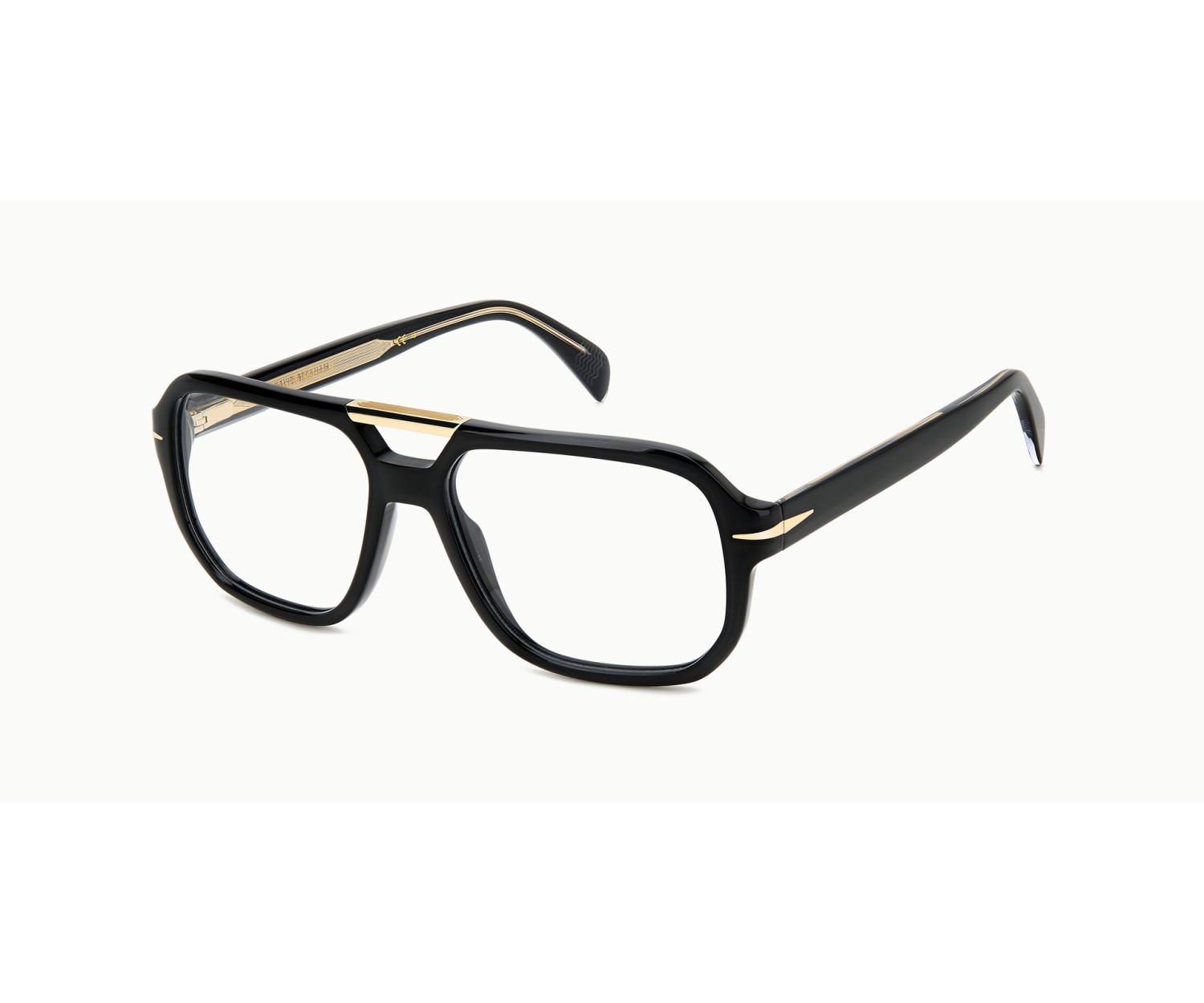 Prescription · Eyewear by David Beckham DB 7108: bold geometry, understated details View the model
 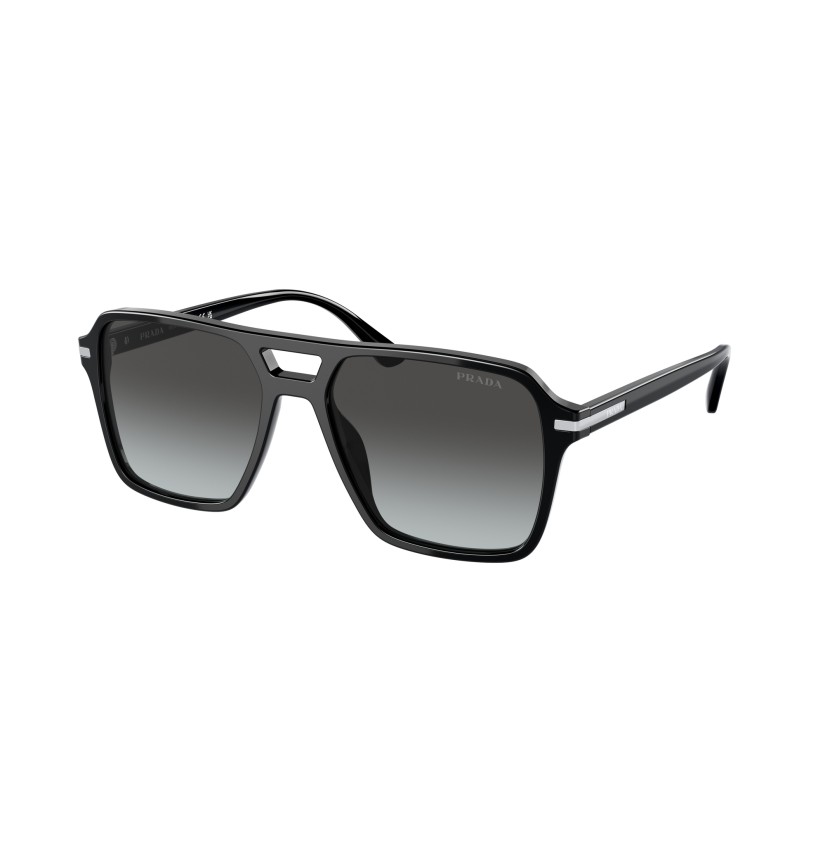 Sunglasses · Prada PR 20YS: the bridge becomes architecture View the model
 Models, images and product details verified on 16 October 2026. Colours, availability and terms of purchase are subject to change: please check the product details before making your choice.
Frequently asked questions about double-bridge glasses
Are double-bridge frames only found in sunglasses?
No. It also features in prescription frames: Victoria Beckham, Carrera and Eyewear by David Beckham offer very different interpretations.
Does a double bridge always mean an Aviator style?
No. The second bridge can also feature on navigator, rectangular or geometric shapes. It is the overall design of the frame that determines its character.
Can double-bridge sunglasses be fitted with prescription lenses?
Not automatically. Compatibility depends on the model and the lenses required, and should be checked before purchase.
Sources for the models and features mentioned: official product descriptions from Victoria Beckham, Carrera, Eyewear by David Beckham, Tom Ford, Prada, Gucci, Saint Laurent and HUGO, accessed on 16 October 2026. The mention of a brand does not imply that that model is available from Isolani.