







































































Your cart
There are no more items in your cart

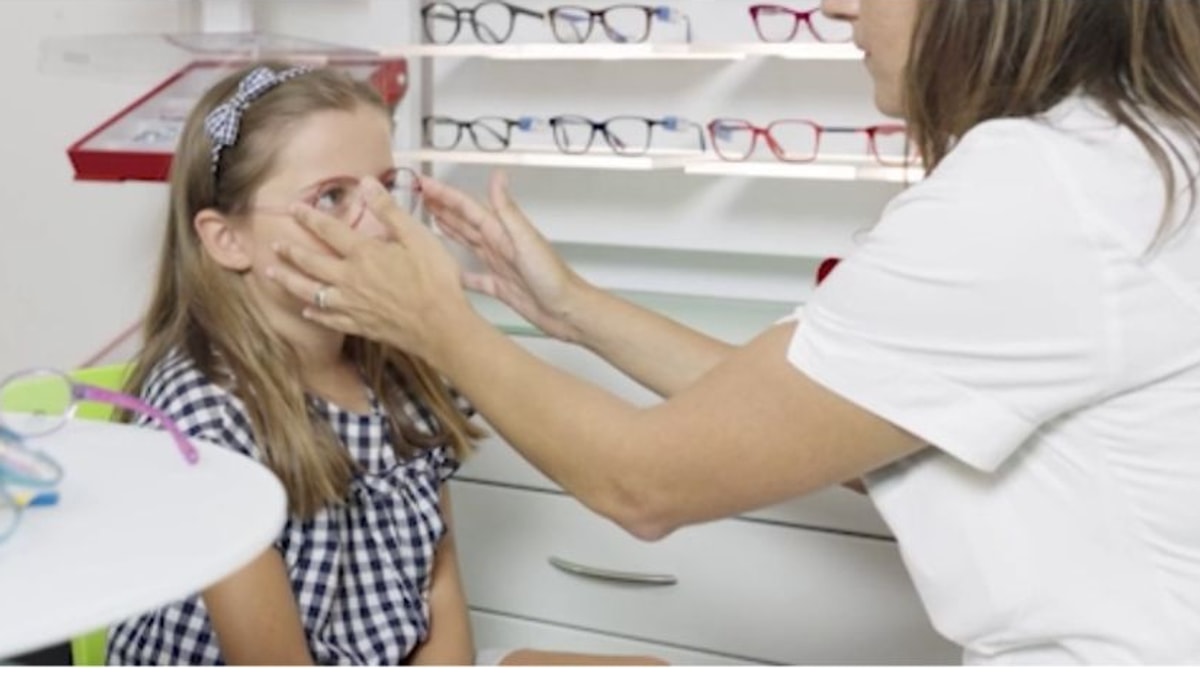
From exercise books to the blackboard, from sport to digital life: the right pair of glasses really must be there to support children and teenagers throughout their day
Going back to school means getting back into the routine of alarm clocks, lessons, homework, sport and busy afternoons. Even the way they look around changes constantly: from their book to the blackboard, from homework to play, from indoors to the playground. For a child who wears glasses, seeing clearly isn’t just about reading a line of text: it’s about feeling free throughout the day.
That’s why the start of the new school year is a good time to check that your child’s vision is up to date and that their glasses are still secure, comfortable and suitable for their growth. It all starts with an assessment of the ophthalmologist; our work begins with the prescription and transforms it into a precise optical solution, tailored to the child’s everyday life.
School is not ‘one-size-fits-all’
In the classroom, the eyes are constantly shifting rapidly between near and far distances. The child reads, writes, looks at pictures, follows what’s on the blackboard and moves about the room. At home, there’s homework; then there’s sport, play and outdoor activities.
There is therefore no single pair of ‘school’ glasses that suits everyone. Age, prescription, posture, activities and the way the frames are worn vary from child to child. The right solution comes from combining the optometrist’s advice with precise technical craftsmanship.
It all starts with a consultation and a prescription from the ophthalmologist
Assessment, diagnosis, prescription and clinical monitoring are the responsibility of the ophthalmologist. This is an important point, particularly during childhood, when a vision problem should not be addressed with off-the-shelf solutions or general advice.
Once we have received your prescription, at Centri Ottici Isolani we take care of the entire optical process: choosing the frames, taking measurements, centring the lenses, manufacturing the glasses, making any necessary adjustments and providing after-sales support. If your optician specifies a particular technology or lens type, we work with leading manufacturers to ensure the prescription is fulfilled correctly.
A frame that stays in place
For children, the frame is not just a simple rim. It must fit the face without being too tight, hold the lenses securely in place and remain stable whilst the child bends their head down, runs or plays. The bridge, temples, weight, materials and size must all be chosen together, not one at a time.
Glasses that slip change the position of the lenses in front of your eyes; a pair that’s too loose can be difficult to wear day in, day out. That’s why we focus on fit and adjustments, as well as style. Discover our guide to children's glasses.
Behavioural Centring: assessing the child in their natural posture
A lens may be designed with great precision, but it must then be in the correct position when the glasses are actually worn. The Isolani Behavioural Alignment Observe their posture, the tilt of their head, the natural position of their glasses and the way they look at things.
It’s our secret weapon, and we use it in the design of all our children’s glasses, not just for the most advanced lenses. In theIsolani Experience Technology is used to design glasses tailored to the individual, without compromising on comfort, stability and everyday practicality.
Before school, let’s check that the glasses fit properly
Before term starts, pop into one of our optical centres with your child’s glasses. We’ll check the fit, the nose pads, the temples, the angle and how securely they sit on the face, making any necessary technical adjustments to ensure the frames are correctly aligned. Find your nearest branch on the page Where we are.
Fitting checks and technical adjustments are free: This isn’t a suggestion to change your child’s glasses, but a way of checking that the pair they wear every day are still comfortable, secure and in good condition. We also check the screws, temple tips, nose pads and the general condition of the lenses and, where possible, we sort out any minor issues caused by everyday wear and tear free of charge.
We want the child and their family to feel supported and protected even after the handover. For the most serious unforeseen circumstances, the following is available: Comprehensive cover for children’s glasses, which also covers theft and loss in accordance with the terms and conditions. If, however, any issues arise that require a clinical examination or a review of the prescription, the patient should still be referred to an ophthalmologist.
Digital devices: how they fit into your day
Smartphones and tablets are becoming part of children’s daily lives at an increasingly early age, particularly outside school: at home, whilst travelling, whilst waiting, or at mealtimes. The issue is not occasional use, but the total amount of time spent on devices held very close to the eyes, and what that time ends up replacing: free play, physical activity, socialising, drawing and outdoor activities.
When symptoms such as tiredness, eye strain or difficulty concentrating arise, the solution should begin with an eye test, an up-to-date prescription and an assessment of the child’s actual habits. A special lens or filter may be recommended when it meets a specific need. Adequate viewing distance, comfortable lighting, regular breaks and a variety of activities remain essential.
Myopia is on the rise worldwide: international projections suggest that by 2050 it could affect around half the population. It is a complex phenomenon, in which individual predisposition and daily habits are intertwined. Among the environmental factors studied are prolonged close-up work, the increasing use of smartphones and tablets, and a reduction in the amount of time spent outdoors.
The total time spent on digital devices therefore warrants attention. A recent systematic review, which brought together 45 studies and over 335,000 participants, found that as the number of hours spent daily increases, so too does the likelihood of developing short-sightedness. This finding forms part of a broader picture, involving individual predisposition and visual habits. For this reason, regular breaks, maintaining the correct viewing distance, shifting one’s gaze and spending time outdoors – all of which studies have linked to a lower risk of developing short-sightedness – make a real difference to a child’s daily routine.
For further reading: World Health Organisation’s World Report on Vision, a systematic review of digital devices and short-sightedness e IMI Report on Risk Factors for Myopia.
When short-sightedness changes as you grow up
For children with short-sightedness, the ophthalmologist may recommend a specific treatment plan and arrange follow-up appointments. There are now various ophthalmic and contact lens technologies designed to correct short-sightedness and slow its progression; these are not automatically interchangeable and must be used in accordance with the prescription and the instructions provided.
In our in-depth look at the Progressive short-sightedness in children We explain the roles, technologies and the Isolani method. There are also guides available on MiYOSMART lenses with D.I.M.S. technology and to the Essilor Stellest lenses with H.A.L.T. technology.
Monitoring continues after delivery
As the child grows, the glasses grow with them. The temples may become loose, the front section may tilt and the fit may change. Technical checks and adjustments help to keep the frame in the correct position; clinical checks, on the other hand, are carried out at intervals specified by the optometrist.
Where relevant, in the Simulation Room We can explain and compare the solutions before implementation.
Frequently Asked Questions
Is an eye test always necessary before going back to school?
The need for and frequency of check-ups depend on the child’s condition and the advice of the ophthalmologist. If any new symptoms have arisen or the prescription needs to be reviewed, you should consult the ophthalmologist.
How do you choose a suitable pair of glasses for a child?
The frame, bridge, temples, weight, materials, prescription and daily activities must all be taken into account. The frame must support the lenses and remain stable without causing uncomfortable pressure.
What is the Isolani Behavioural Approach?
This is the method by which we combine optical measurements with posture, the natural position of the frame and visual behaviour, in order to create the spectacles in the conditions in which they will actually be worn.
Do you always need a lens with a specific filter for smartphones and tablets?
A specific lens or filter is useful when it meets a specific need. The choice depends on the prescription, the advice given and the child’s habits; the viewing distance, lighting, breaks and variety of activities are also important factors.
Should children’s glasses be checked even after they’ve been collected?
Yes. Growth and daily wear can affect the fit and alignment of the frames. Isolani provides adjustments and technical support, whilst clinical check-ups are carried out as directed by the optometrist.
Is the tyre pressure check before school free of charge?
Yes. At Centri Ottici Isolani, fit checks and technical adjustments are free of charge and, where possible, we also sort out minor everyday mishaps at no extra cost. For more serious incidents, we offer comprehensive cover specifically for children’s glasses; clinical matters and prescriptions remain the responsibility of the ophthalmologist.
The information on this page is provided for information purposes only and relates to the optical and commercial sectors. It does not contain any medical, clinical or diagnostic content.